
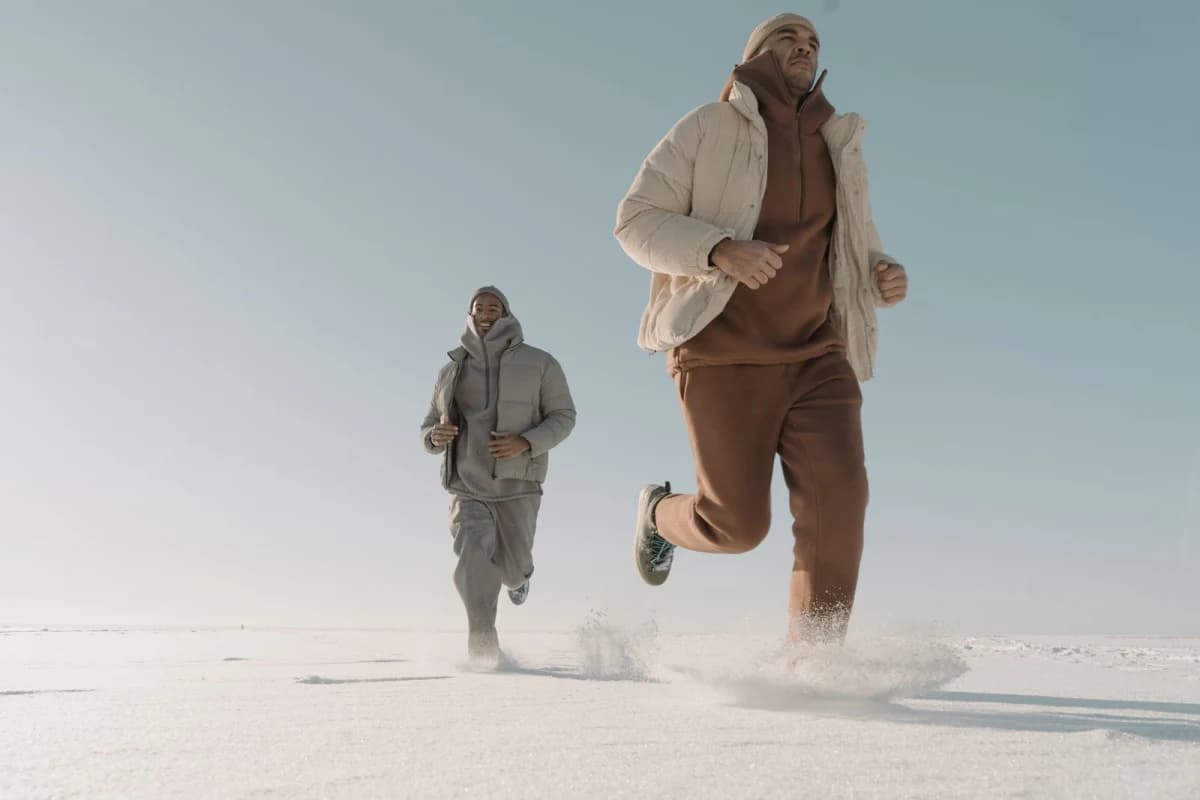
Every October, the same thing happens at running clubs across Canada: the fair-weather crowd quietly disappears, and a smaller, slightly smug group keeps showing up through the slush, the −20°C mornings, and the 4:45 p.m. sunsets. The difference between the two groups is rarely fitness. It is gear, expectations, and about three weeks of stubbornness in November. This guide covers all three: how to dress for real Canadian cold, when it is genuinely too cold to run, what to do about your feet and your lungs, and how to stay safe when half your run happens in the dark.
Key takeaways
- Dress for 10–20°F (roughly 5–10°C) warmer than the thermometer says, you should feel slightly chilly for the first kilometre, not toasty at your front door.
- The system is always the same: moisture-wicking base layer, insulating mid-layer, windproof breathable shell. Never cotton.
- Below about −15°C, switch from gloves to mitts, cover your face with a buff or balaclava, and protect your thighs with a wind layer.
- Most runners can train safely well below −20°C with proper gear; wind chill and ice underfoot are usually the real reasons to move a run indoors.
- You still need water and fuel in winter, you still need to be visible after dark, and your pace will be slower, plan for all three.
The layering system: what to wear at every temperature
Winter running has one golden rule, repeated by every coach, running store, and sports-medicine body: dress for how warm you will be mid-run, not how cold you are standing on your porch. The standard guidance, from Fleet Feet, MEC, and the American College of Sports Medicine, is to dress as though it is 10–20°F (about 5–10°C) warmer than the actual temperature. Your body is a furnace once moving; overdress and you will finish soaked in sweat, which then chills you on the cooldown.
The three-layer system:
- Base layer: snug, moisture-wicking, directly on skin. Merino wool or synthetic, never cotton, which holds sweat against your skin and loses all insulating value when wet.
- Mid-layer: the insulation. Fleece for most winter days; a thin synthetic-insulated layer for deep cold. (Down is a poor choice for running, it collapses when wet with sweat.)
- Outer layer / shell: windproof, breathable, water-resistant. This is the single most important piece you own, wind is what makes −10°C feel dangerous.
Temperature-by-temperature (adjust to whether you run hot or cold):
- 0 to −5°C: long-sleeve base + light shell, tights, light gloves, headband or thin toque.
- −5 to −10°C: add a mid-layer, switch to warmer gloves, full toque, consider a neck buff.
- −10 to −15°C: insulated or fleece-lined tights, wind-blocking mitts (warmer than gloves), buff over the neck and lower face, wool socks.
- −15 to −25°C: full system, base + insulated mid + shell up top, thermal base layer under wind pants below, mitts, balaclava or buff + toque, windproof briefs or an extra thigh layer. Sunglasses or clear glasses help against wind and blowing snow glare.
- Below −25°C: everything above, doubled where possible, and seriously consider whether this particular run needs to happen outside (see below).
Extremities fail first: hands, ears, and (for men, notably) thighs. If one thing is going numb on every run, that is the piece of gear to upgrade, not a sign your body cannot handle winter.
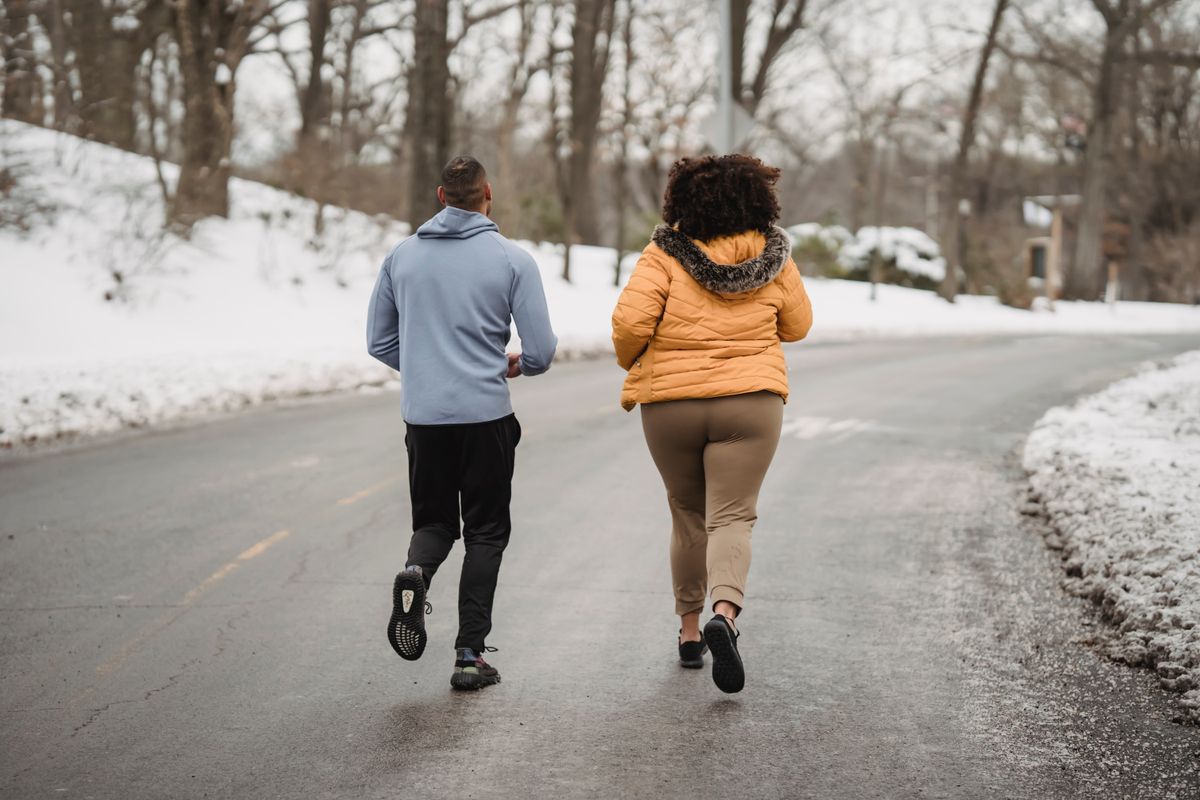
Is it too cold to run outside?
For most healthy, properly dressed runners, there is no magic temperature where running becomes unsafe, experienced Canadian runners train through −25°C and colder. The real decision factors are wind chill, footing, and your own health.
Wind chill is the number to watch, not the thermometer. Environment Canada's wind chill warnings exist because exposed skin can freeze in under 30 minutes when wind chill drops past about −28, and in minutes at more extreme values. On high-wind-chill days, cover every centimetre of skin, shorten the run, choose a sheltered route (ravines, downtown corridors, tree-lined paths), or take it inside.
Ice ends more winter running streaks than cold does. A hidden patch of black ice under fresh snow is how seasons end in a physiotherapy clinic. Options: run on cleared paths and roads, shorten your stride and keep your feet under your body on suspect surfaces, or add traction, many runners swear by slip-on coil traction aids for icy days, and trail shoes with aggressive lugs handle packed snow far better than road racers.
Your lungs: cold air is dry air, and hard breathing in sub-zero temperatures can trigger coughing, wheezing, or exercise-induced bronchospasm, especially if you have asthma. Ease in with nasal breathing or a buff/balaclava over your mouth on the coldest days (it warms and humidifies incoming air), keep efforts moderate when it is bitterly cold, and carry your reliever inhaler if you have one. If you experience chest tightness or wheezing that does not resolve, stop and talk to your doctor, this is one area where "tough it out" is bad advice.
Shoes, socks, and feet
You do not need special "winter running shoes" to start, but winter does punish footwear neglect:
- Socks: wool or synthetic-blend running socks, tall enough to cover the gap between shoe and tights, freezing ankles are a rite of passage nobody needs. No cotton.
- Shoes: your regular trainers work down to about −10°C for most people; below that, or on snow, trail shoes with lugged soles earn their keep. Some runners go up half a size in winter to fit thicker socks without compressing circulation.
- Gaiters: cheap, unfashionable, wonderful, they keep snow out of your shoes on unplowed paths.
- After the run: get out of wet shoes and socks immediately. Frostnip loves damp feet in a cold car.
Staying visible in the dark
From November through February, a huge share of Canadian running happens in darkness, the clocks fall back on November 1, 2026, and daylight is scarce for months (more on coping with the darkness at our early-darkness survival guide and our daylight saving time explainer). Treat visibility as non-negotiable gear:
- A headlamp or chest light (lets you see ice, lets cars see you).
- Reflective vest or reflective strips on your shell, drivers' headlights need something to bounce off.
- A blinking red rear light, the kind cyclists use, costs little and is visible from far behind.
- Run against traffic, assume drivers cannot see you, and skip the noise-cancelling earbuds on roads.
Fuel, water, and winter physiology
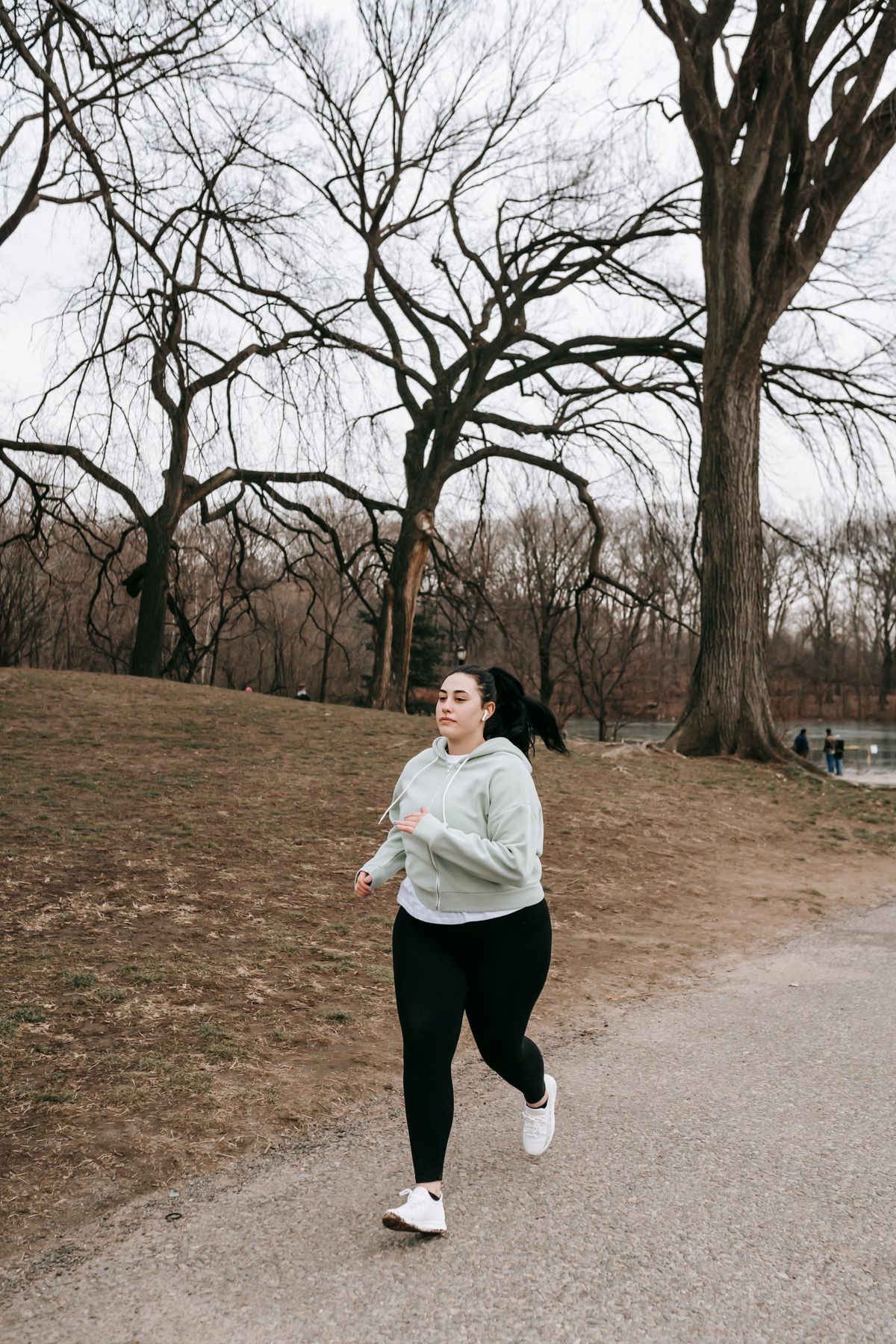
Cold running burns more energy than you expect, your body works to stay warm on top of the running itself, so do not skip fuel on long runs just because you are not visibly sweating. You are still losing fluid through respiration (watch your breath cloud: that is water leaving your body) and sweat under your layers. Insulated flasks or hydration vests kept under your shell stop water from freezing; gels can turn to bricks in a pocket, so keep them warm too.
Two more winter-specific notes: warm up indoors for 10–15 minutes before heading out (cold muscles are injury-prone), and change out of damp layers the moment you stop, heat loss accelerates fast once you are standing still. Keep a dry "after bag" in your car or by your door: dry shirt, warm jacket, dry socks.
Winter is also when many Canadians run low on vitamin D, see our guide at vitamin D guide for winter, which is worth addressing alongside your training, not instead of it.
The beginner's first-winter plan
If this is your first winter running, do not try to replicate your summer training. A sane progression:
- Weeks 1–2 (now, October): keep your normal runs, but add one layer and note what you actually needed. Start a gear log, it pays off all winter.
- Weeks 3–4: buy the missing pieces (shell jacket and mitts first; they matter most), and try one run in light snow.
- November: accept slower paces, 30–60 seconds per kilometre slower on snow and ice is normal and smart. Shift one weekly run to a treadmill or indoor track as your foul-weather backup so bad days do not break the habit.
- December onward: you are a winter runner. The secret the smug group knows: January running, once you are dressed for it, is genuinely pleasant, quiet streets, bright snow, no overheating.
Practical next steps
- This week: check what you own against the three-layer system; buy the shell and mitts before the first real cold snap, not during it.
- Lay out gear the night before morning runs, decision fatigue at 6 a.m. in the dark kills more workouts than weather does.
- Scout one well-lit, reliably cleared winter route near home now, before you need it.
- Set a personal wind-chill threshold (many runners use −25 to −30 wind chill as the indoor line) and honour it without guilt.
- If you have asthma, heart conditions, or Raynaud's, talk to your doctor about cold-weather exercise before your first −20°C run.
The bottom line
Winter running in Canada is a gear problem with a fitness reward: dress in wicking layers under a windproof shell, protect your extremities, respect wind chill and ice more than the thermometer, stay lit after dark, and slow down without shame. Do that through November, and by January you will understand why the winter runners look smug. They earned it.
This article is general fitness information, not medical advice. Cold-weather exercise carries risks, especially for people with asthma, heart conditions, circulation disorders, or other health concerns, consult a qualified health professional before starting a winter training program.
Sources
- MEC, Winter running: gear and tips for cold weather
- Fleet Feet, How to Dress in Layers for Cold Weather
- HEATJAC, What to Wear Running in Cold Weather (ACSM & Mayo Clinic guidance)
- Doc Lyss Fitness, Winter running: why it feels hard, how cold is too cold & how to dress
- Dick's Sporting Goods, Cold Weather Running Tips
Quick answers
Frequently asked questions
01
What should I wear for winter running in Canada?
Follow the three-layer system and dress for how warm you will be mid-run, not how cold you are standing on your porch: dress as though it is 10–20°F (about 5–10°C) warmer than the thermometer says. That means a moisture-wicking base layer (merino wool or synthetic, never cotton), an insulating mid-layer, and a windproof breathable shell. Below about −15°C, switch from gloves to mitts, cover your face with a buff or balaclava, and add a wind layer over your thighs. Overdress and you will finish soaked in sweat, which chills you on the cooldown.
02
Is it too cold to run outside in winter?
For most healthy, properly dressed runners, there is no magic temperature where running becomes unsafe, experienced Canadian runners train through −25°C and colder. The real decision factors are wind chill and ice underfoot. When wind chill drops past about −28, exposed skin can freeze in under 30 minutes; many runners use −25 to −30 wind chill as their indoor line. Ice ends more running streaks than cold does, so run on cleared paths, shorten your stride on suspect surfaces, or add traction.
03
Do I need special winter running shoes?
Not to start. Your regular trainers work down to about −10°C for most people; below that, or on snow, trail shoes with lugged soles earn their keep. What matters more is the sock, wool or synthetic-blend running socks, tall enough to cover the gap between shoe and tights, never cotton, plus cheap slip-on gaiters to keep snow out on unplowed paths.
04
How do I breathe comfortably in freezing air?
Cold air is dry air, and hard breathing in sub-zero temperatures can trigger coughing, wheezing, or exercise-induced bronchospasm, especially if you have asthma. Ease in with nasal breathing or a buff/balaclava over your mouth on the coldest days (it warms and humidifies incoming air), keep efforts moderate when it is bitterly cold, and carry your reliever inhaler if you have one. If chest tightness or wheezing does not resolve, stop and talk to your doctor, "tough it out" is bad advice here. This is general fitness information, not medical advice.
05
How do I stay visible running in the dark?
Treat visibility as non-negotiable gear from November through February, when a huge share of Canadian running happens in darkness. Use a headlamp or chest light (so you can see ice and cars can see you), a reflective vest or reflective strips, and a blinking red rear light. Run against traffic, assume drivers cannot see you, and skip the noise-cancelling earbuds on roads.