Health information disclaimer: This article is for general information only and is not medical advice. Weight-loss medications affect everyone differently, and decisions about starting, continuing, or stopping them should be made with a licensed healthcare professional. Information is current as of October 2026 and reflects research available in Canada; drug availability, coverage, and clinical guidance may differ by province. If you experience concerning symptoms such as significant weakness, dizziness, or rapid unintended weight loss, speak to your clinician promptly.
Few questions about Ozempic, Wegovy, Mounjaro, and Zepbound generate more anxiety than this one: sure, the weight comes off, but is it eating your muscle too? Social media is full of gaunt "before and after" photos presented as proof. The reality, as 2026's research shows, is more nuanced, and more reassuring, than the headlines, with one important catch.
The short answer: GLP-1 drugs are associated with real lean mass loss, but the evidence does not show they cause disproportionate muscle wasting. About a quarter to a third of the weight lost is lean mass, and that proportion looks a lot like what happens with diet-driven weight loss. The people who protect their muscle are not doing anything exotic. They are lifting weights and eating protein.
Key takeaways
- A 2026 systematic review and meta-analysis of 20 randomized trials (15,782 participants) found lean mass represented roughly 25 to 39 percent of total weight lost on incretin-based therapies: about 35.2 percent for semaglutide, 25.4 percent for tirzepatide, and 26.8 percent for liraglutide.
- That proportion was similar to intensive lifestyle weight loss (about 26.2 percent), suggesting this is largely a weight-loss effect, not a drug-specific muscle-melting effect.
- Resistance training changed the picture dramatically: lifestyle plus resistance training brought the lean-mass share down to about 17.5 percent.
- "Lean mass" on a DXA scan is not the same as muscle: it includes water, glycogen, organs, and connective tissue, so scans overstate true muscle loss.
- Highest-risk groups: older adults, women, and anyone starting with low muscle mass.
What the trials actually measured
The most-cited 2026 evidence is a systematic review and meta-analysis pooling 20 randomized controlled trials with 15,782 participants, measuring body composition with DXA and MRI scans. Its headline numbers, widely reported in 2026:
Approach | Share of weight lost that was lean mass |
|---|---|
Semaglutide (Ozempic, Wegovy) | About 35 percent |
Tirzepatide (Mounjaro, Zepbound) | About 25 percent |
Liraglutide | About 27 percent |
Diet and lifestyle alone | About 26 percent |
Diet plus resistance training | About 18 percent |
Two things stand out. First, the drug numbers sit in the same neighbourhood as dieting alone, which undercuts the claim that GLP-1s uniquely destroy muscle. Second, resistance training is the standout variable: it roughly halved the lean-mass share compared with semaglutide alone.
The individual trial substudies tell the same story in absolute terms. In the STEP 1 body-composition substudy, semaglutide reduced total fat mass by 19.3 percent and total lean body mass by 9.7 percent. Because fat fell so much more, the proportion of the body made up of lean mass actually increased by about 3 percentage points. In the SURMOUNT-1 DXA substudy, tirzepatide at 72 weeks reduced body weight by 21.3 percent, fat mass by 33.9 percent, and lean mass by 10.9 percent: roughly 75 percent of the weight lost was fat, 25 percent lean mass.

Lean mass is not muscle (and why that matters)
Here is the terminology trap behind most scary headlines. DXA scans divide the body into fat mass, bone, and "lean soft tissue." That lean compartment includes skeletal muscle, but also water, glycogen, organs, connective tissue, and skin. When a scan reports 3 kilograms of lean mass lost, it does not mean 3 kilograms of contractile muscle vanished.
This matters because rapid weight loss always sheds water and glycogen early, and organs can shrink modestly as body size decreases. Preclinical research published in 2026 even found that in obese mice on GLP-1 medicines, the loss of liver mass exceeded the loss of muscle mass. The scan number is real, but "35 percent of weight lost was lean mass" is not the same as "35 percent of your muscles disappeared."
That said, the concern is not imaginary either. The evidence is mixed on whether function declines, and it is genuinely concerning in older adults, where muscle is harder to rebuild and matters more for independence. The honest summary from the research: meaningful fat loss dominates, some true muscle loss occurs, and it responds well to intervention.
Who is most at risk
The risk is not evenly distributed. Evidence reviews consistently flag three groups:
- Older adults. Age-related muscle loss (sarcopenia) is already underway, rebuilding is slower, and functional consequences, weaker grip, slower walking, higher fall risk, matter more.
- Women. Lower baseline muscle mass means the same absolute loss is a larger functional hit.
- People starting with low muscle mass. If there is little reserve, even proportional loss can cross into weakness.
The modifiable risk factor across all groups is the same: large, rapid weight loss with inadequate protein and no resistance training. Appetite suppression is the drug doing its job, but it also suppresses protein intake unless you plan around it.
The two things that actually protect muscle
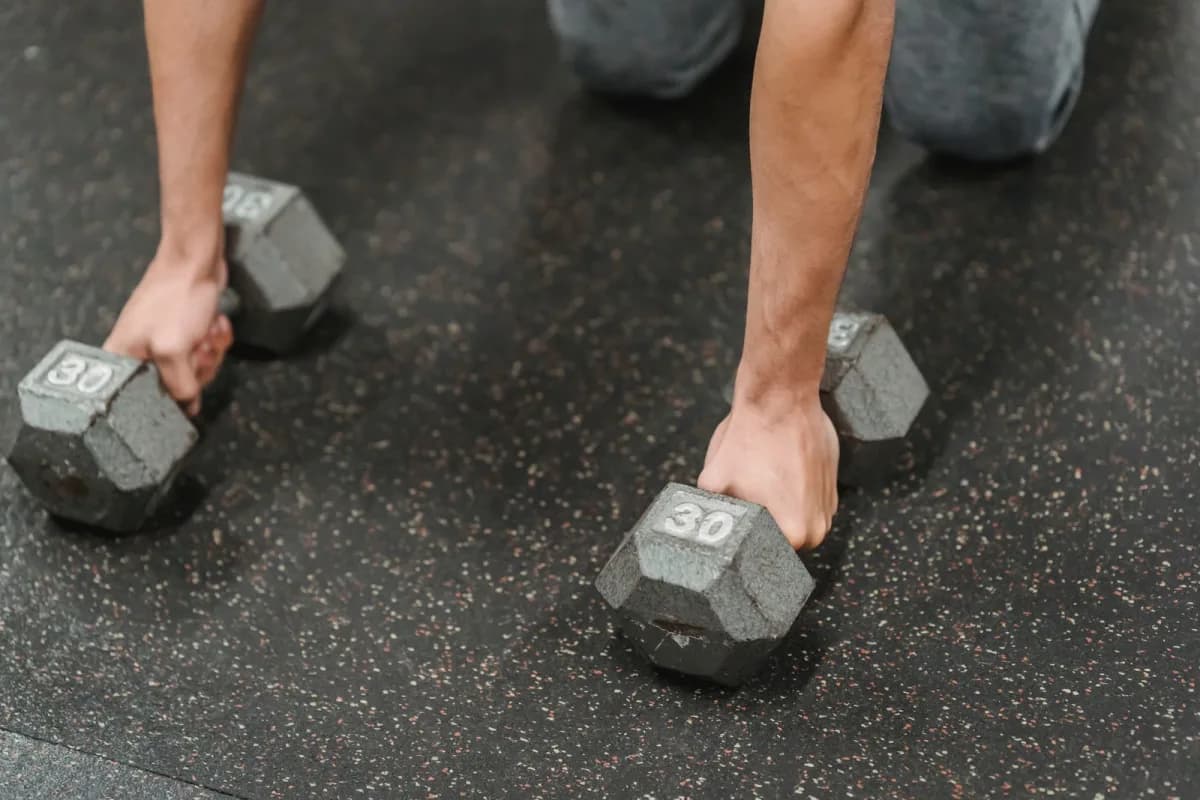
1. Resistance training. This is the single most effective countermeasure in the evidence base, and it is not close. The meta-analysis figure, 17.5 percent lean-mass share with resistance training versus 26 to 35 percent without, is the strongest argument in this entire article for picking up weights. Case series data go further: patients who train 3 to 5 days per week with resistance exercises can maintain, or even gain, lean tissue during GLP-1-induced weight loss. You do not need a bodybuilder's program. Two to four full-body sessions per week, progressive overload, covering legs, push, pull, and core, covers it.
2. Protein. Evidence summaries point to roughly 1.2 to 1.6 grams of protein per kilogram of body weight daily, higher for active people. On a drug that makes the thought of food unappealing, that target takes deliberate planning: protein-forward meals, Greek yogurt, eggs, fish, legumes, and, where needed, protein shakes to close the gap. Track intake for a few weeks until you know what your target looks like on a plate.
Beyond those two, the supporting cast: adequate sleep, vitamin D and calcium for bone (rapid weight loss can affect bone density too), and body-composition monitoring rather than scale-watching alone, so you and your clinician can see what kind of weight is coming off.

What about the next generation of drugs?
Drug developers have noticed the muscle question. Next-generation candidates aim to shift weight loss further toward fat: CagriSema pairs a GLP-1 with amylin, and anti-myostatin antibodies, which directly target muscle preservation pathways, are being tested alongside GLP-1s in trials such as Regeneron's COURAGE study. (One cautionary note: Eli Lilly halted its Phase 2b trial of the anti-myostatin agent bimagrumab with tirzepatide in September 2025, citing strategic business reasons, a reminder that promising mechanisms do not always survive development.) Triple-agonist drugs like retatrutide and amylin combinations like CagriSema are also being studied partly for their effects on body composition, though long-term data are still maturing.
Practical next steps
- If you are starting a GLP-1: begin resistance training now, not after the weight is off. Two full-body sessions a week is a fine start. Set a daily protein target with your clinician or dietitian.
- If you are already on one and worried: ask your clinician about body-composition monitoring (DXA or bioimpedance) so decisions are based on what you are losing, not just how much.
- Track protein for two weeks. Most people on appetite-suppressing drugs are surprised how far short they fall. Awareness fixes most of it.
- Older adults: prioritize this most. Discuss strength, balance, and fall-risk screening with your clinician alongside the prescription.
- Do not stop the drug over headlines. Discuss concerns with your prescriber; dose, pacing, and adjunct strategies can be adjusted.
The bottom line
Do GLP-1 drugs cause muscle loss? They are associated with real lean-mass loss, roughly a quarter to a third of total weight lost, but the 2026 evidence says this is largely the price of rapid weight loss itself, not a unique muscle-melting property of the drugs. The proportion mirrors diet-driven weight loss, scan numbers overstate true muscle loss, and resistance training plus adequate protein transform the outcome. The goal was never just a smaller number on the scale. It is high-quality weight loss: fat down, muscle kept, strength intact.
Sources
- 2026 systematic review and meta-analysis of 20 RCTs (15,782 participants) on lean mass changes with incretin therapies (PMID 41877354), summarized at: https://www.onedaymd.com/2026/09/glp-1-muscle-loss.html
- Prevention guide with 2026 meta-analysis figures and STEP 1 / SURMOUNT-1 substudy data: https://onedaymd.aestheticsadvisor.com/2026/09/how-to-prevent-muscle-loss-on-glp-1.html
- Dibesity, "Do GLP-1 Drugs Really Cause Muscle Loss? What The 2026 Research Shows" (BELIEVE trial, COURAGE trial, measurement caveats): https://dibesity.com/glp-1-drugs-muscle-loss-2026-research/
- Peptide Journal, "GLP-1 Agonists and Muscle Mass: Research Concerns" (at-risk groups, protein targets, next-generation therapies): https://www.peptidejournal.org/research/glp-1-agonists-muscle-mass-research-concerns
- NutraSmarts, "Creatine on GLP-1 Drugs: Protecting Muscle While You Lose Weight": https://www.nutrasmarts.com/blog/creatine-on-glp-1-muscle-preservation
Quick answers
Frequently asked questions
01
Do GLP-1 drugs like Ozempic and Wegovy cause muscle loss?
They are associated with lean mass loss, but the evidence does not show disproportionate muscle wasting. A 2026 meta-analysis of 20 randomized trials (15,782 participants) found lean mass made up roughly 25 to 39 percent of total weight lost on incretin drugs, semaglutide about 35 percent, tirzepatide about 25 percent, which was similar to the proportion lost with intensive diet and lifestyle programs. Note that DXA-measured lean mass includes water, organs, and connective tissue, not just muscle.
02
How much of the weight lost on GLP-1s is muscle versus fat?
In the SURMOUNT-1 body-composition substudy, tirzepatide reduced body weight 21.3 percent, fat mass 33.9 percent, and lean mass 10.9 percent at 72 weeks, so about 75 percent of the weight lost was fat and 25 percent was lean mass. In the STEP 1 substudy, semaglutide cut fat mass 19.3 percent and lean mass 9.7 percent, and the share of body weight made up of lean mass actually rose by about 3 percentage points.
03
Who is most at risk of muscle loss on GLP-1 drugs?
Older adults, women, and people who start with low muscle mass face the highest risk of clinically meaningful lean mass loss and functional decline. Rapid, large weight loss without resistance training or adequate protein is the main modifiable risk factor. If you are in one of these groups, discuss body-composition monitoring with your clinician.
04
Does resistance training really prevent muscle loss on GLP-1s?
It is the single most effective countermeasure in the evidence. The 2026 meta-analysis found that lifestyle treatment combined with resistance training had the most favorable profile, with lean mass accounting for only about 17.5 percent of weight lost, versus roughly 26 percent for lifestyle alone. Case series data show patients training 3 to 5 days per week can maintain or even gain lean tissue during GLP-1-induced weight loss.
05
How much protein should I eat while on a GLP-1 drug?
Evidence summaries point to roughly 1.2 to 1.6 grams of protein per kilogram of body weight per day, higher for active individuals. GLP-1 drugs suppress appetite strongly, so hitting protein targets takes deliberate planning: protein-forward meals, and for some people, shakes or Greek yogurt to close the gap. Discuss targets with your clinician or dietitian.
06
Is the muscle loss from GLP-1s permanent?
Lean mass can be rebuilt. Muscle tissue responds to resistance training and protein at any age, and the loss seen in trials is not fundamentally different from the lean mass lost during any major weight loss. The concern is mainly for older adults, where rebuilding is slower and functional decline matters more, which is why prevention during treatment is the priority.