
Canadians pay some of the highest airfares in the developed world, and where you start your trip matters enormously. Expedia's 2026 Air Hacks report put hard numbers on it: the cheapest departure airport in the country averages $257 for a domestic economy ticket, while the priciest averages $884. Same country, same year, more than triple the price. The difference is the airport.
This guide is about the where, not the when. (For timing, the short version is in the saver-routes section below: Thursdays are cheapest overall, and booking roughly two to three months ahead hits the sweet spot.) Here is the 2026 data, why secondary airports win, the specific saver routes, and the honest math on when driving to a cheaper airport stops being worth it.
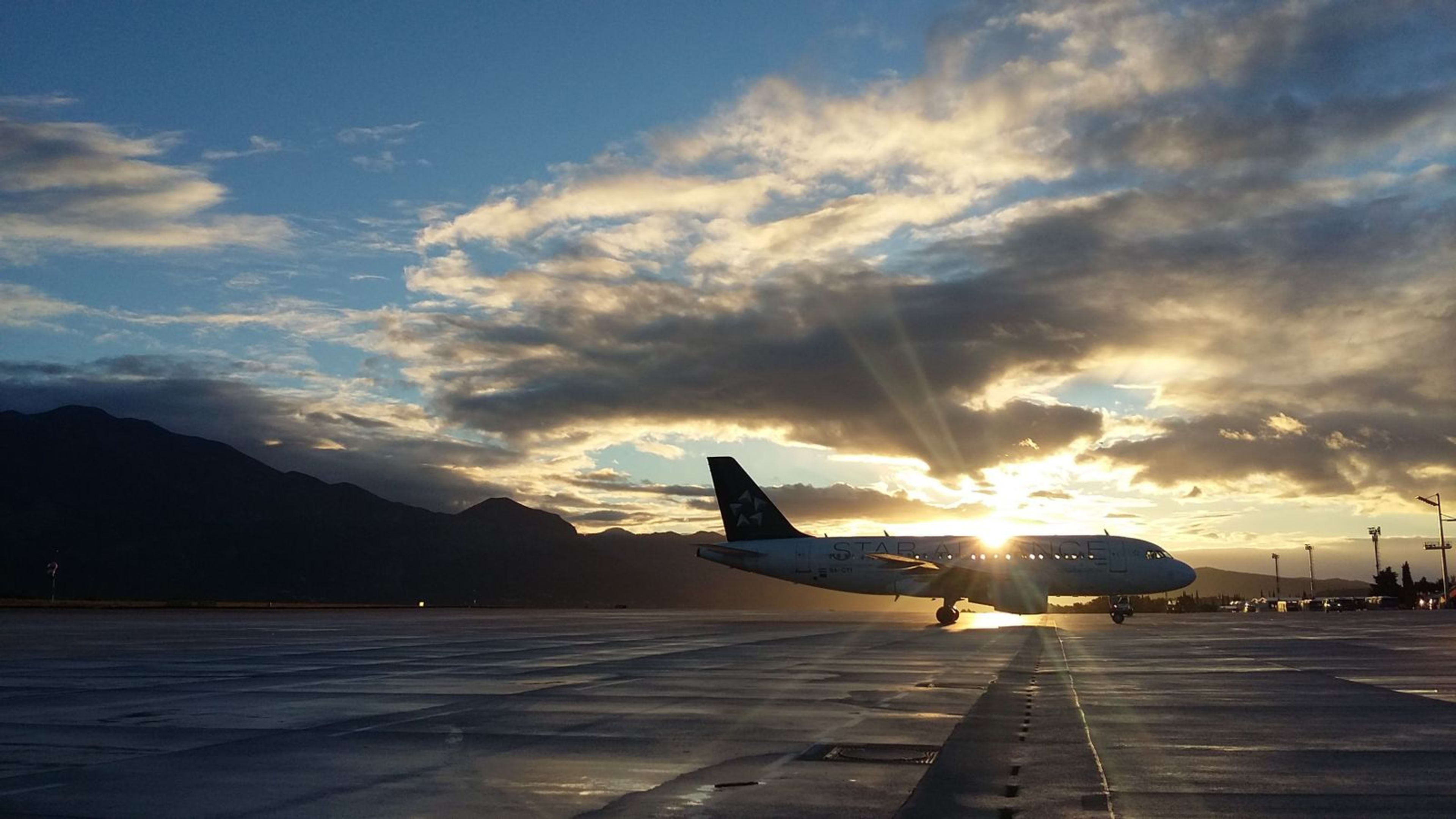
The photos in this post are illustrative stock images.
The 2026 numbers: cheapest and priciest departure airports
Expedia's 2026 Air Hacks data, reported via Travel Industry Today, ranked Canadian airports by average domestic economy fare:
Cheapest three:
- Abbotsford (YXX): $257
- Kitchener-Waterloo (YKF): $341
- Hamilton (YHM): $478
Priciest three:
- Montreal Trudeau (YUL): $884
- Quebec City (YQB): $850
- Ottawa (YOW): $783
The pattern is unmistakable: secondary airports serving major metro areas beat the big hubs. Abbotsford serves Greater Vancouver, Kitchener and Hamilton serve the Greater Toronto Area, and all three dramatically undercut their big-city neighbours. The reason is competition structure: secondary airports are where Flair and Porter concentrate service, and where airport fees and operating costs run lower.
One data point that shows how extreme the gaps get: Flytrippers reported an Abbotsford to Hamilton roundtrip at $142 versus a normal price around $309. That is a secondary-to-secondary route priced like a bus ticket.

Why secondary airports are cheaper
Three forces push secondary-airport fares down:
Budget-carrier concentration. Flair built its network on airports like Abbotsford, Kitchener, and Hamilton, where fees are lower and it can turn aircraft fast. Porter has expanded aggressively into Hamilton and London. When two or three carriers fight over the same route from a small airport, fares fall.
Lower airport improvement fees. Big hubs charge more per passenger, and those fees flow straight into ticket prices. Smaller airports charge less.
Less business-travel demand. Hub airports like Toronto Pearson and Montreal Trudeau carry heavy last-minute business traffic willing to pay high fares, which lifts the average. Secondary airports skew leisure, where every passenger is price-sensitive.
The Canadian Travel News analysis from April 2026 made exactly this point, advising travellers to compare Abbotsford against Vancouver and Hamilton against Toronto, while warning that Flair's unbundled model means adding carry-on and seat fees to the comparison. The airport saving is real, but it has to survive the all-in math (more on that below).
The saver routes: where the deals hide
Expedia's 2026 data also flagged the cheapest specific routes, and they are almost all secondary-airport stories:
- Kitchener to Fort Lauderdale: $305
- Saskatoon to Minneapolis: $355
- St. John's to Tampa: $368
- London, Ontario to Orlando: $376
- Comox to Orange County: $389
Notice what these have in common: a smaller Canadian airport paired with a secondary US destination (Fort Lauderdale instead of Miami, Orange County instead of LAX). The cheapest fares in Canada are found at both ends of the route by avoiding the biggest airports. If your destination is flexible, the savings compound: fly Kitchener to Fort Lauderdale instead of Toronto to Miami and you can save hundreds per person.
Thursday is the cheapest day to depart overall, per the same data, and Friday is the cheapest day to fly domestically; flying Thursday instead of Saturday saves up to 8%. The quietest days, November 25, December 10, and April 8, are worth checking for off-peak bargains.

Sun routes from secondary airports
Winter sun is where secondary airports quietly shine. Flair's winter 2026/27 schedule includes Cancun from Edmonton, Calgary, and Montreal, Puerto Vallarta from Montreal, and Puerto Plata from Toronto. Porter's winter network spans 40+ sun routes with 150 percent capacity growth, adding Aruba, Costa Rica, Montego Bay, and Los Cabos. Much of this capacity touches secondary airports, and the competition is pushing sun fares down.
The strategic insight for sun travellers: do not default to your nearest big hub. A family of four flying Hamilton to Cancun instead of Pearson to Cancun can save enough to cover the resort upgrade. Check the secondary airport first, then compare.

The cross-border trick: US airports near Canada
For travellers near the border, the cheapest "Canadian" departure airport is sometimes American. The classic plays:
- Bellingham (BLI) for Vancouver-area travellers: Allegiant and Alaska service, often dramatically cheaper for US domestic connections.
- Buffalo/Niagara (BUF) for the GTA and Southern Ontario: a short drive for access to US low-cost carriers.
- Plattsburgh (PBG) for Montreal: marketed for years as "Montreal's US airport."
The fares can be strikingly lower because US airports enjoy more carrier competition and lower fees. But run the full math: parking (often $10 to $20 USD per day), fuel or transit, the exchange rate on every dollar, border-crossing time (Nexus helps enormously), and an earlier arrival buffer. It also complicates travel insurance slightly and means clearing US customs on the way down. For a solo traveller on a cheap fare, the savings usually win. For a family of four with bags, the margin gets thinner. Our piece on why Canadians are skipping US trips in 2026 is worth reading alongside this strategy for the demand-side context.

The catch: add the ground costs
Here is where the secondary-airport strategy dies if you are careless. Abbotsford is about an hour from downtown Vancouver. Hamilton is 45 to 75 minutes from downtown Toronto depending on traffic. Kitchener is further. Every dollar of airfare savings has to survive:
- Ground transport: GO Transit to Hamilton is cheap; a rideshare is not. Abbotsford from Vancouver by transit is slow; by car it is fuel plus parking.
- Parking: multi-day airport parking at a secondary airport is cheaper than at Pearson, but it is not free.
- Time: an extra two hours each way has a value, especially on short trips.
- Frequency risk: secondary airports have fewer daily flights. If your flight cancels, the next option may be tomorrow, not in three hours. Build buffer into important trips.
The rule: compute the all-in cost (fare plus bags plus ground transport plus parking) for both the secondary airport and the big hub. The secondary airport usually still wins, but "usually" is doing a lot of work, and the exceptions are expensive.
The positioning-flight strategy
Frequent deal-hunters use a more advanced version of the secondary-airport play: the positioning flight. Instead of booking one ticket from your home airport to your final destination, you book a cheap domestic hop to the airport with the best long-haul fare, then a separate ticket onward.
Example: you live in Vancouver and want to fly to London. The YVR to London fare is steep, but a $257-average Abbotsford to Toronto hop plus a separately booked Toronto to London fare can undercut it, because Toronto has far more transatlantic competition than Vancouver. The same logic works eastward: Maritimers sometimes position through Montreal, and Prairie travellers through Calgary.
The risks are real and must be priced in. Separate tickets mean no protection if the first flight is delayed: if your positioning flight is late, the long-haul carrier owes you nothing, and you buy a new ticket at walk-up prices. Never position on the same day without a generous buffer; seasoned travellers position the night before and treat the hotel as part of the fare. Also add baggage twice: you will pay bag fees on both tickets unless status or fare type covers them. The strategy shines for solo travellers with carry-on only and flexible schedules, and it fades for families with checked bags and tight connections.
When the big hub wins anyway
Intellectual honesty requires the other side: sometimes Pearson, Vancouver International, or Montreal Trudeau is the right answer despite the higher average fare.
Tight connections. If your itinerary has a connection under 90 minutes, the hub's frequency is insurance. A missed connection at Pearson usually means a later flight the same day; a missed connection at a secondary airport can mean tomorrow.
Early-morning departures. The first flight out of a secondary airport may leave after the ground-transport options start running, forcing an expensive rideshare or a night-before hotel that erases the fare saving. Hub airports with 24-hour transit access do not have this problem.
Loyalty and alliances. If you are chasing Aeroplan Elite status or have upgrade certificates, flying the hub on Air Canada metal earns where a Flair ticket from Abbotsford does not. Status has a dollar value; price it.
International connections. For trips beyond North America, the hub's nonstop options often beat any secondary-airport saving. A one-stop itinerary through a secondary airport adds hours and misconnection risk that no $100 saving justifies.
The secondary-airport strategy is a default, not a religion. Run the all-in math both ways, and let the numbers decide each trip.
Key takeaways
- Abbotsford ($257), Kitchener ($341), and Hamilton ($478) are Canada's cheapest departure airports for domestic economy in 2026, per Expedia's Air Hacks data. Montreal ($884), Quebec City ($850), and Ottawa ($783) are the priciest.
- Secondary airports win because of budget-carrier concentration, lower fees, and leisure-skewed demand.
- The cheapest routes pair small airports at both ends: Kitchener to Fort Lauderdale ($305), London to Orlando ($376), Comox to Orange County ($389).
- Thursday is the cheapest day to depart overall (Friday is cheapest for domestic routes); Thursday-over-Saturday saves up to 8%.
- US border airports (Bellingham, Buffalo, Plattsburgh) can beat Canadian fares, but add parking, exchange, and border time.
- Always run the all-in math: fare plus bags plus ground transport plus parking, secondary versus hub.
Practical next steps
- For your next trip, price the same dates from the nearest secondary airport (Abbotsford, Hamilton, Kitchener, London) and the big hub side by side.
- Add one carry-on and one checked bag to every fare before comparing; see our budget airline ranking for the fee landscape.
- Check Thursday departures and the quiet dates (November 25, December 10, April 8) for off-peak savings.
- If you are near the border, price Bellingham, Buffalo, or Plattsburgh with parking and exchange included.
- Book roughly two to three months ahead for domestic trips; Expedia's 2026 data puts the domestic booking sweet spot near 71 days out. International timing varies more by route.
The bottom line
The cheapest airport in Canada is rarely the closest one. In 2026, the data says to look past the big hubs to Abbotsford, Kitchener, and Hamilton, pair small airports at both ends of the route, and fly on Thursdays. The savings are real, often hundreds of dollars, but they belong to the traveller who does the all-in math. Do it once per trip and it becomes habit; skip it and the "cheap" fare can cost more than Pearson ever did.
Sources
- Travel Industry Today: Expedia 2026 Air Hacks report (airport rankings)
- Expedia Canada newsroom: 2026 Air Hacks (Thursday cheapest day)
- Flytrippers: Abbotsford-Hamilton fare deal
- Canadian Travel News: Abbotsford vs Vancouver, Hamilton vs Toronto analysis
- AeroRoutes: Flair winter 2026/27 schedules
- Aviacionline: Porter 2026/27 winter network <!-- VERIFY: Travel Industry Today, Flytrippers, and Canadian Travel News URLs are domain roots from the research pack; confirm exact article URLs at publish. -->
Quick answers
Frequently asked questions
01
What is the cheapest airport to fly from in Canada?
Abbotsford International (YXX), per Expedia's 2026 Air Hacks report: average domestic economy fare of $257, the lowest in the country. Kitchener ($341) and Hamilton ($478) round out the cheapest three. Montreal ($884), Quebec City ($850), and Ottawa ($783) are the most expensive.
02
Is it cheaper to fly from Hamilton or Toronto?
Usually Hamilton. Hamilton (YHM) averages $478 for domestic economy fares in Expedia's 2026 data, far below Toronto Pearson, and it is served by Flair and Porter. A reported YXX-YHM roundtrip was spotted at $142 versus $309 normally. Factor in ground transport to Hamilton before deciding.
03
Is it cheaper to fly from Abbotsford or Vancouver?
Abbotsford averages $257 for domestic economy, the cheapest in Canada. It is about an hour from downtown Vancouver, so the savings have to beat the drive or transit cost. For budget-carrier routes (Flair flies from YXX), Abbotsford usually wins on the all-in math.
04
What day is cheapest to fly in Canada?
Thursday, per Expedia's 2026 Canada data: flying Thursday instead of Saturday saves up to 8%, and Friday is the cheapest day to fly domestically. The quietest (and often cheapest) travel days cluster around November 25, December 10, and April 8.
05
Should I drive to a US airport to fly cheaper?
Sometimes, especially near the border (Bellingham, Niagara/Buffalo, Plattsburgh). US airports can offer cheaper fares and more competition, but add parking, the exchange rate, border-crossing time, and the fact that some travel insurance treats it differently. It is a real strategy, not an automatic win.