
Every fall, Canadian furnaces kick on and indoor humidity falls off a cliff. Heated cold air holds almost no moisture: in Prairie homes the relative humidity commonly drops into the teens, and Winnipeg houses at 15% or less in January are unremarkable. The result is the full winter package: static shocks off every doorknob, nosebleeds, cracked skin, and hardwood floors opening gaps between boards.
A humidifier fixes this, but buying the wrong type, or running it at the wrong level, creates a second problem: condensation streaming down your windows, which rots frames and feeds mould. This guide starts where a Canadian guide should start, with the official humidity targets for cold weather, then moves to the picks: portable models with verified prices, the white-dust question that decides ultrasonic versus evaporative, and the whole-house furnace option for owners.
A note on prices: dollar figures below are manufacturer or US list prices verified in October 2026 and are marked as such. Canadian retail prices move with sales and exchange rates, so check amazon.ca, Best Buy Canada, Canadian Tire, or Costco.ca for current CAD pricing before buying. Each pick slot is marked for easy affiliate-link insertion later.
Key takeaways
Health Canada says keep indoor relative humidity between 30% and 50%. CMHC adds the crucial cold-weather rule: during heating season do not exceed 45%, and in very cold weather 30% or lower may be needed to stop window condensation.
The target moves with the outdoor temperature: roughly 50% max above -10C, 40% or lower from -10 to -20C, 30% or lower from -20 to -30C, and 25% or lower below -30C.
Ultrasonic humidifiers are quiet and efficient but can leave white mineral dust on furniture with hard water. Evaporative models avoid the dust but need wick or filter replacements every 3 to 6 months.
The portable picks: the Levoit Classic 300S as the best all-round bedroom unit, the Levoit Classic 160 as the budget pick, the Dreo HM713S for warm mist, and the Honeywell HEV320 evaporative for hard-water homes.
Owners with forced-air heating should price a whole-house furnace-mounted unit: it humidifies every room automatically but needs professional installation, a water line, and a fresh pad each season.
Your humidity target moves with the thermometer
This is the single most Canadian fact in home comfort, and most humidifier guides bury it. The right indoor humidity is not one number; it slides down as the outdoor temperature drops, because colder glass condenses moisture sooner.
The CMHC-informed table used by Canadian HVAC contractors:
- Above -10C: up to 50% relative humidity
- -10C to -20C: 40% or lower
- -20C to -30C: 30% or lower
- Below -30C: 25% or lower
CMHC's own guidance for the heating season says indoor relative humidity should not exceed 45%, and that in very cold weather 30% or lower may be needed to prevent condensation on windows. Health Canada's standing guidance is 30% to 50%, with instructions to dry window frames daily if condensation appears.
The practical takeaway: a humidistat set to a fixed 45% all winter is wrong for most of Canada. On a -25C week in Edmonton or Winnipeg, 45% will soak your windows. Smart humidifiers with auto modes that target a set humidity still need you to lower the setpoint as the temperature falls. Check the outdoor temperature when you check the humidistat.
The window-condensation trap
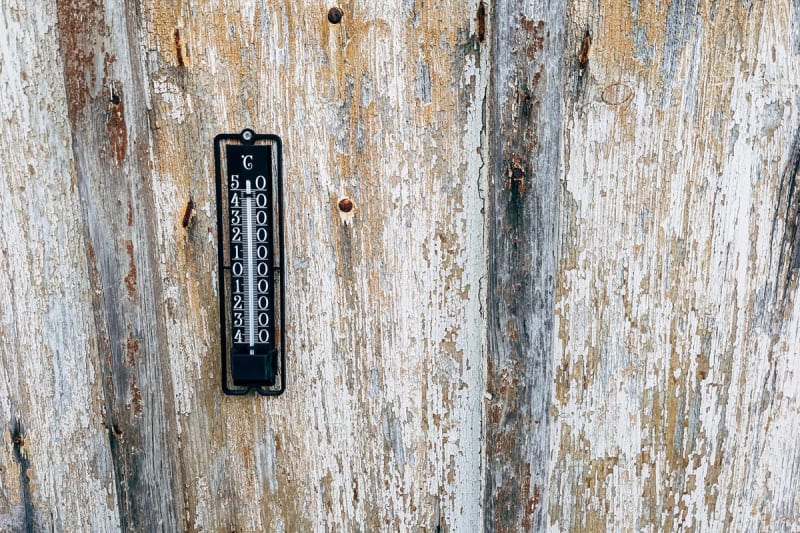
Condensation is what happens when warm, moist indoor air meets a cold window surface: the air cools, it cannot hold its moisture, and water beads on the glass. A little fogging on the coldest mornings is normal. Streaming water, ice forming on the inside of the pane, or black spotting on wooden frames is not: it means your humidity is too high for the temperature, and sustained wetness rots wood frames and feeds mould.
The fix is counterintuitive for new humidifier owners: when you see condensation, turn the humidifier down, following the temperature table above, rather than turning it off entirely. Bone-dry air brings back the static and the nosebleeds. The goal is the highest humidity your windows can tolerate at the current outdoor temperature, which on a -20C night might be 30%.
Older homes with single-pane or aging double-pane windows condense sooner than modern triple-pane units. If your windows weep at 35% while the table allows 40%, trust your windows: they are the final authority.

Ultrasonic vs evaporative: the white-dust question
Portable humidifiers come in two main types, and the choice matters more in Canada than in most buying guides admit, because so many Canadian cities have hard water.
Ultrasonic units use a vibrating diaphragm to throw a fine cool mist into the air. They are quiet (often under 30 dB on sleep mode), energy-efficient, and usually cheaper. The catch: they aerosolize everything in the water, including dissolved minerals. With hard water, those minerals settle as a fine white dust on furniture, floors, and electronics near the unit. Distilled or demineralized water solves it, but buying distilled water all winter is its own chore and expense.
Evaporative units blow air through a wet wick or filter; the water evaporates and the minerals stay trapped in the wick. No white dust, ever. The trade: the fan makes them slightly louder, and the wick or filter needs replacing every 3 to 6 months depending on water quality and use. In hard-water cities, this is usually the lower-hassle option despite the filter cost.
Warm mist (used by the Dreo pick below) boils water to make steam. It kills most microbes in the process and the warm output feels good in winter, but it uses more electricity and the hot surfaces need care around kids and pets.
The portable picks
[PICK SLOT: best overall bedroom humidifier] Levoit Classic 300S. The default recommendation for a reason: a 6-litre top-fill tank, coverage up to about 505 sq ft, near-silent sleep mode, and the VeSync app with auto mode that holds a target humidity. Top-fill matters more than it sounds: you refill it like a kettle instead of flipping a tank in the sink. US list price verified at $79.99 in October 2026 (up from $71.99); expect Canadian retail in the low C$100s depending on sales. Best for: bedrooms and medium rooms where quiet matters.
[PICK SLOT: best budget humidifier] Levoit Classic 160. The smaller sibling: 2.5-litre tank, same top-fill design, quieter operation than anything near its price. US list $39.99. It will not cover a large living room, but for a bedroom or home office it is the value floor of the category. Best for: small rooms, first humidifiers, kids' rooms.
[PICK SLOT: best warm-mist humidifier] Dreo HM713S. A 6-litre smart warm-and-cool mist unit: warm-mist mode heats the output for fast relief, 740 sq ft coverage, up to 60-hour runtime, and app control with humidity tracking. US list around $90. Warm mist costs more in electricity than cool mist, but for sinus sufferers in deep winter it is the most comfortable option. Best for: large living areas, anyone who wakes up congested.
[PICK SLOT: best evaporative for hard water] Honeywell HEV320. An evaporative cool-moisture unit with a wicking filter that traps minerals, so no white dust regardless of your water. Two output settings, up to 18 hours per fill, and a 3-year limited warranty. Canadian retail pricing was not verified at draft time; check Best Buy Canada and Home Depot Canada for current CAD pricing. Best for: hard-water cities, anyone who tried ultrasonic and hated the dust.
A note on coverage claims: manufacturers quote maximum square footage under ideal conditions. In a drafty Canadian house in January, assume real-world coverage runs 20 to 30% below the box claim, and size up if you are between models.
The whole-house furnace option
If you own your home and heat with forced air, the endgame is a furnace-mounted humidifier: a bypass unit (the AprilAire 600/700M class is the reference standard) or a steam unit plumbed into the ductwork. It humidifies every room automatically, holds the setpoint against the temperature table without daily refills, and eliminates the white-dust question entirely since it ties into your water line.
The costs are real: the unit itself, professional installation, a water line and drain connection, and a fresh evaporator pad every heating season. Installed cost varies widely by market and furnace layout; get two or three quotes from local HVAC contractors in the fall before heating season starts. For renters, condo owners without forced air, and anyone not ready for a project, the portable picks above are the right answer.
One caution: whole-house units can over-humidify just as portables can. Make sure the installer sets up an outdoor-temperature sensor or shows you how to adjust the humidistat as the weather turns. The temperature table in this guide applies to furnace humidifiers too.
Cleaning and refills: the part everyone skips
Every humidifier guide should say this louder: a dirty humidifier is worse than no humidifier. Warm, standing water grows biofilm, and an ultrasonic unit will happily aerosolize it into the room. The routine is simple:
- Daily: empty and refill the tank with fresh water. Do not top up yesterday's water.
- Every few days: rinse the tank and wipe accessible surfaces.
- Weekly: descale with white vinegar, rinse thoroughly, and let parts air-dry.
- Evaporative wicks: replace every 1 to 2 months in hard water, up to 6 months in soft water. A crusty, discolored wick is done.
Top-fill designs (both Levoit picks) make the daily refill dramatically easier, which is half the reason they top recommendation lists: the best humidifier is the one you actually maintain. If you travel for a week in winter, empty the unit before you leave rather than letting water sit.

Practical next steps
Buy a cheap hygrometer first if you do not have one. A $15 digital hygrometer tells you your actual indoor humidity, which decides whether you need a humidifier at all and what target to set. Many smart thermostats display humidity too.
Match the humidifier to your water. Hard water (white scale on kettles and taps) points to evaporative or distilled-water ultrasonic; soft water gives you the full menu.
Size for the room you sleep in first. Bedrooms deliver the most hours of benefit per dollar, since you spend eight hours breathing that air.
Set the humidistat from the temperature table, not from a fixed number. Start at 40% in mild cold, drop to 30% when it falls below -20C outside, and watch the windows: they are the final judge.
If you own with forced air, get fall quotes for a furnace-mounted unit before the first cold snap; HVAC schedules fill fast once heating season starts.
The bottom line
Canadian winter air needs active humidity management: Health Canada's 30-to-50% band, tightened by CMHC's cold-weather rule, with the target sliding down as the outdoor temperature falls. For most households the Levoit Classic 300S is the right portable pick, the Classic 160 covers budgets, the Dreo HM713S covers warm-mist preference, and the Honeywell HEV320 covers hard-water homes; owners with forced air should price a furnace-mounted unit. Buy the hygrometer, follow the temperature table, and clean the tank: the maintenance matters more than the model.
Sources
- Health Canada: addressing moisture and mould in your home
- CMHC Moisture and Air guide (PDF via Brown Window)
- CMHC indoor humidity temperature table
- The Winnipegger's guide to home humidity
- Whole-house humidifiers for dry winter air
- Best whole-house humidifiers for winter dry air 2026
- Honeywell HEV320 specs: Home Hardware Canada (18-hour runtime, 2 settings)
- Levoit humidifier prices and models, October 2026
- Levoit Classic 300S: manufacturer specs (6L, 505 sq ft, VeSync)
- Best smart humidifiers for dry winter air 2026
- Dreo HM713S smart humidifier
Quick answers
Frequently asked questions
01
What humidity level should my house be in winter in Canada?
It depends on the outdoor temperature. Health Canada recommends 30% to 50% relative humidity indoors. CMHC guidance for the heating season says not to exceed 45%, and in very cold weather 30% or lower may be needed to prevent window condensation. A common Canadian table: above -10C up to 50%, -10 to -20C 40% or lower, -20 to -30C 30% or lower, below -30C 25% or lower.
02
Ultrasonic vs evaporative humidifier: which is better for Canadian winter?
Ultrasonic units are quieter and use less energy, but they can scatter fine white mineral dust on furniture if you have hard water, which is common in many Canadian cities. Evaporative units avoid the white dust because minerals stay in the wick, but the wick or filter needs replacing every 1 to 6 months depending on water hardness (1 to 2 months in hard water, up to 6 months with soft water). With hard water, evaporative is usually the lower-hassle choice.
03
Do humidifiers protect hardwood floors in winter?
Yes, within reason. Heated winter air can drop indoor humidity into the teens (Winnipeg homes commonly hit 15% or less), which shrinks hardwood and opens gaps between boards. Keeping humidity in the 30-40% range through the heating season reduces gapping, cracking, and static. But over-humidifying causes window condensation and potential mould, so follow the temperature-based targets.
04
Why is there condensation on my windows in winter?
Warm indoor air holds moisture; when it hits a cold window surface, the moisture condenses. It means your indoor humidity is too high for the outdoor temperature. The fix is to lower your humidifier's target following the CMHC temperature table, not to stop humidifying entirely. Persistent condensation can damage frames and feed mould.
05
Whole-house furnace humidifier vs portable: which should I get?
A portable humidifier suits renters and single rooms: cheaper, no installation, but you refill it daily and it only covers one space. A whole-house furnace-mounted unit (bypass like the AprilAire 600 class, or steam) humidifies the entire home automatically but needs a water line, a drain, professional installation, and a fresh evaporator pad each heating season. Choose portable for bedrooms, whole-house if you own and heat with forced air.