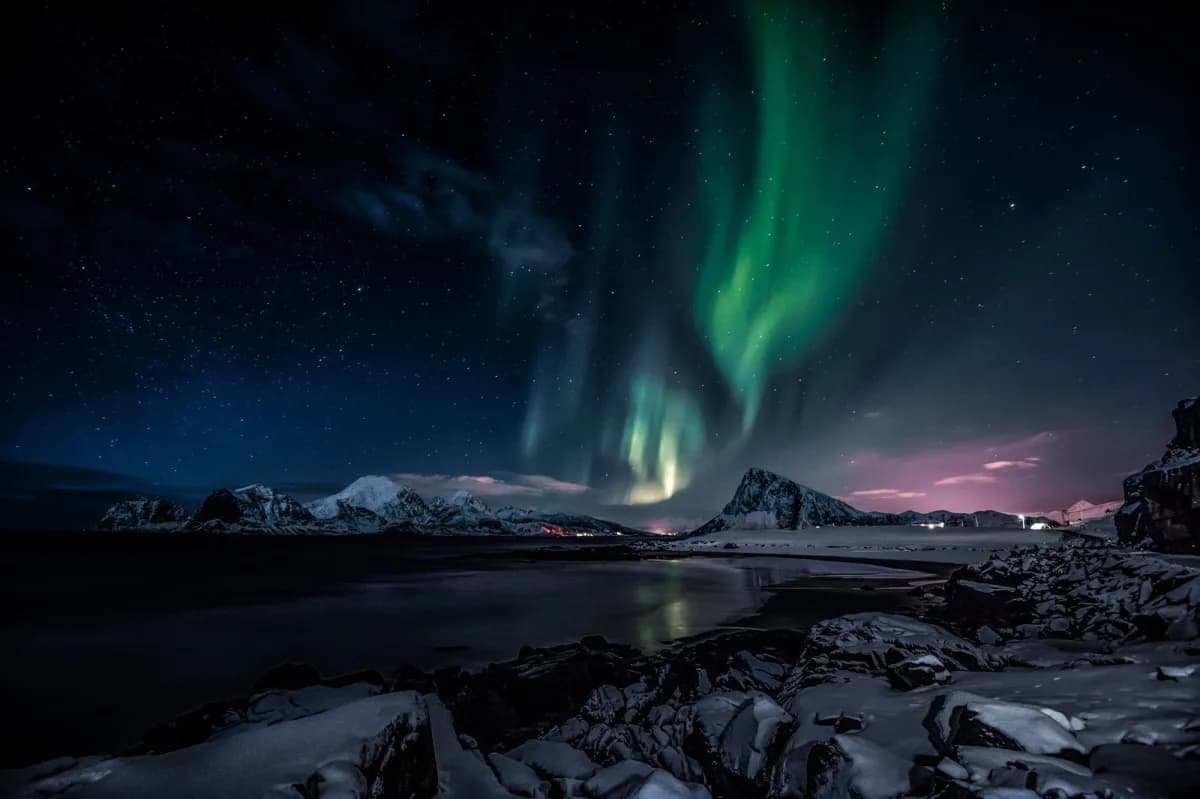
If you have ever told yourself you would see the northern lights "one of these years," this is the year to stop postponing. Aurora season is now open, roughly late September 2026 through early April 2027, and the sun is cooperating: Solar Cycle 25 remains near its maximum, with Kp5+ geomagnetic storms pushing the aurora far south of its usual range multiple times a month. Storm watches were issued as recently as October 5–6. Canada, sitting under or near the auroral oval across much of its landmass, is arguably the best place on Earth to see the show this season. Here is where to go, when to go, how to read the forecast, and how to come home with the photograph.
Key takeaways
- Aurora season in Canada runs late September 2026 to early April 2027; the equinox months (September–October, March) are statistically the most active.
- The big three bases: Yellowknife (directly under the auroral oval, driest skies), Whitehorse (accessible, great tours), and Churchill, Manitoba (peak January–March).
- Southern Canadians are not shut out: during strong storms, the lights reach Jasper, Banff, the Prairies, Muskoka, and even southern Ontario and Quebec.
- Check the Kp index and the NOAA 30-minute aurora forecast, then check cloud cover, clouds kill more aurora nights than weak solar activity does.
- For photos: tripod, manual focus on a bright star, wide-angle lens at f/2.8 or faster, ISO 1600–6400, 5–15 second exposures, shoot RAW, and bring spare batteries, cold drains them fast.
Why this season is special
The aurora is caused by charged particles from the sun colliding with Earth's magnetosphere. The sun runs on an roughly 11-year activity cycle, and Solar Cycle 25 hit its maximum phase around 2024–2025, but the decline is slow, and the cycle's tail is still producing elevated solar wind and coronal mass ejections through 2026 and into 2027. Forecasters described the September–October 2026 window as one of the strongest aurora opportunities in more than a decade.
What that means in practice: storms strong enough to push the visible aurora deep into southern Canada are happening multiple times a month rather than a few times a year. You do not need a perfect storm to see the lights from Yellowknife or Whitehorse, those sit under the oval on ordinary nights, but southern viewers should watch the forecasts and be ready to drive to dark skies on short notice when a G1-class (Kp5) or stronger storm is inbound.
Where to go: Canada's best aurora bases
Yellowknife, Northwest Territories, the aurora capital
Yellowknife sits at 62.5°N, directly beneath the auroral oval, Earth's magnetic pole leans toward Canada, which is why Yellowknife outperforms European destinations at higher latitudes. It is flat, dry, and far from any ocean, so clear nights are common; the territory's tourism board claims the lights appear on as many as 240 nights a year (marketing, but the geography behind it is sound). Viewing season runs mid-August to mid-April, with the deep-winter months offering the longest darkness.
The price of that reliability is cold: January nights routinely hit −30°C to −40°C. Book a guided experience, operators like Aurora Village run heated viewing sites along the Ingraham Trail, and rent the full arctic clothing kit rather than trusting your city winter coat. Current third-party listings put a single evening of guided aurora viewing at roughly CAD 135 to 145 per person before tax. Aurora Village does not publish prices on its public site (all rates are in Canadian dollars plus GST), and multi-night hotel-plus-viewing packages vary widely by operator and season, so price those through the booking engines rather than relying on a single figure.
Whitehorse, Yukon, the accessible north
Whitehorse offers a similar latitude advantage with easier logistics and a livelier tour scene: dogsledding-aurora combos, snowmobile outings, and heated lodges outside the city glow. It is a strong pick for a first aurora trip, especially if you want activities to fill the daylight hours. The season runs roughly late August through mid-April.
Churchill, Manitoba, bears by day, aurora by night
Churchill sits squarely in the auroral oval on the shores of Hudson Bay, with flat terrain giving unobstructed horizon-to-horizon views. The prime aurora season here is January through late March, February and March are considered the sweet spot, with a secondary window in August and September. Subarctic nights are long and often crystal clear; December through February averages −15°C to −26°C. Stay at least three nights to insure against cloudy weather and quiet solar activity. Bonus: winter is also polar bear season on the tundra.
Closer to home: southern viewing during big storms
You do not always need a plane ticket. When the Kp index hits 5 or higher, the aurora can be visible from:
- Jasper National Park, Alberta, a designated Dark Sky Preserve with huge horizons; Banff can work too during strong storms.
- Wood Buffalo National Park, Alberta, among the darkest skies in the country.
- Rural Saskatchewan and Manitoba, the wide-open prairie horizon is a major asset; anywhere away from city lights.
- Torrance Barrens Dark-Sky Reserve, Muskoka, Ontario, the go-to for Toronto-area chasers.
- Bruce Peninsula National Park, Ontario and Mont-Mégantic International Dark Sky Reserve, Quebec, solid eastern options during G1+ storms.
- Northern British Columbia and the Rockies, better odds than the Lower Mainland or southern interior.
The rule for southern viewing: get away from city lights, get an unobstructed view to the north, and go on the night the forecast, not your schedule, says to go.
When to go: the best months and nights
Within the season, two factors matter: solar activity and darkness.
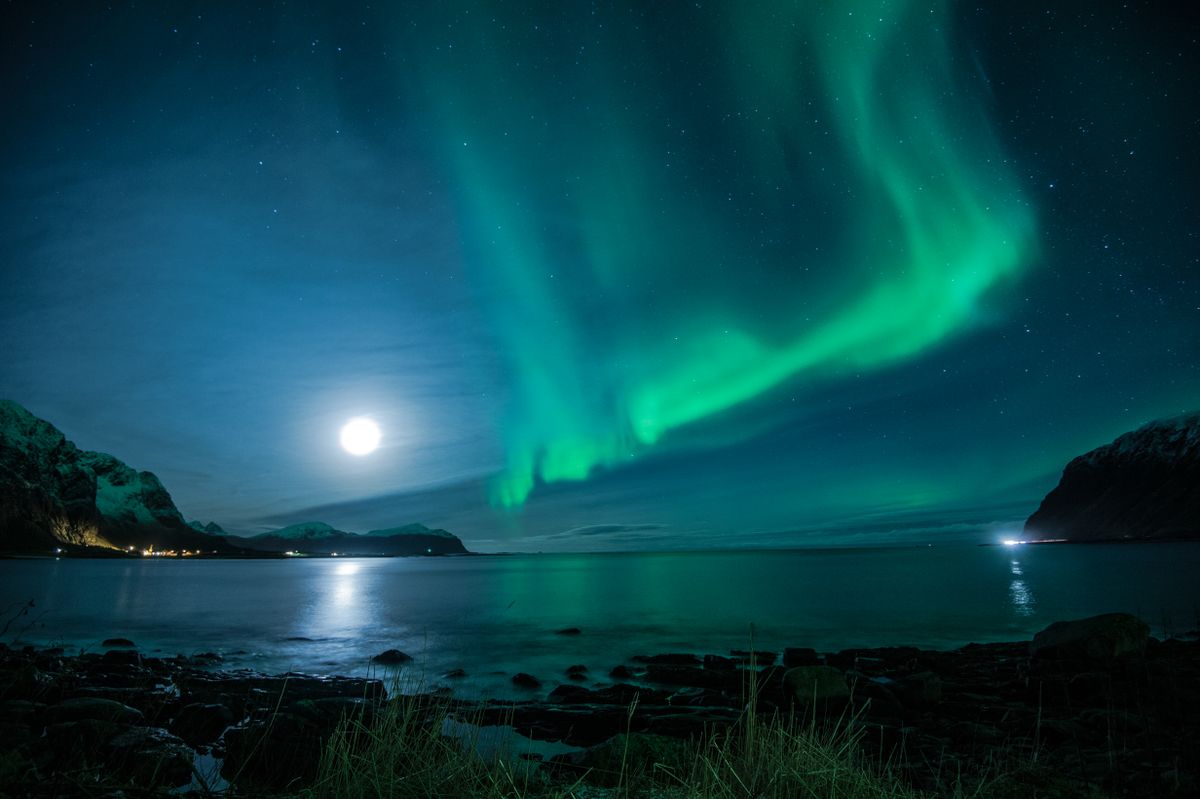
Statistically, the equinox months, September/October and March, produce the most geomagnetic activity. This is the well-documented "equinoctial effect": Earth's orientation relative to the solar wind is most favourable around the equinoxes. That makes right now, October 2026, and March 2027 the highest-probability windows of the entire season.
Darkness is the other half. December and January give Yellowknife and Whitehorse 18+ hours of darkness; by late March, nights are shrinking fast. The darkest skies also come around the new moon, a bright moon washes out all but the strongest displays, so check the lunar calendar when booking.
On any given night, the aurora is most commonly visible between roughly 10 p.m. and 2 a.m. local time, though strong storms can start at dusk and run to dawn. Plan for at least three to four nights at your destination; even in Yellowknife, weather is the main reason trips fail.
How to read the aurora forecast
Forget generic weather apps. The tools aurora chasers actually use:
- The Kp index (0–9): a global measure of geomagnetic activity. Kp5 (G1 storm) is roughly the threshold for southern Canada visibility; Kp7+ can push the lights into the northern U.S. states. In Yellowknife, Kp2–3 is often enough.
- NOAA Space Weather Prediction Center 30-minute forecast: the authoritative short-term aurora outlook, with maps showing the predicted auroral oval. Check it the afternoon of your planned outing and again after dark.
- Aurora apps: My Aurora Forecast and SpaceWeatherLive put Kp, oval maps, and cloud cover in one place with push alerts for your location.
- Cloud cover: the great trip-killer. A Kp7 storm under overcast skies is invisible. Check the cloud forecast alongside the space-weather forecast, and be willing to drive an hour or two to clear skies.
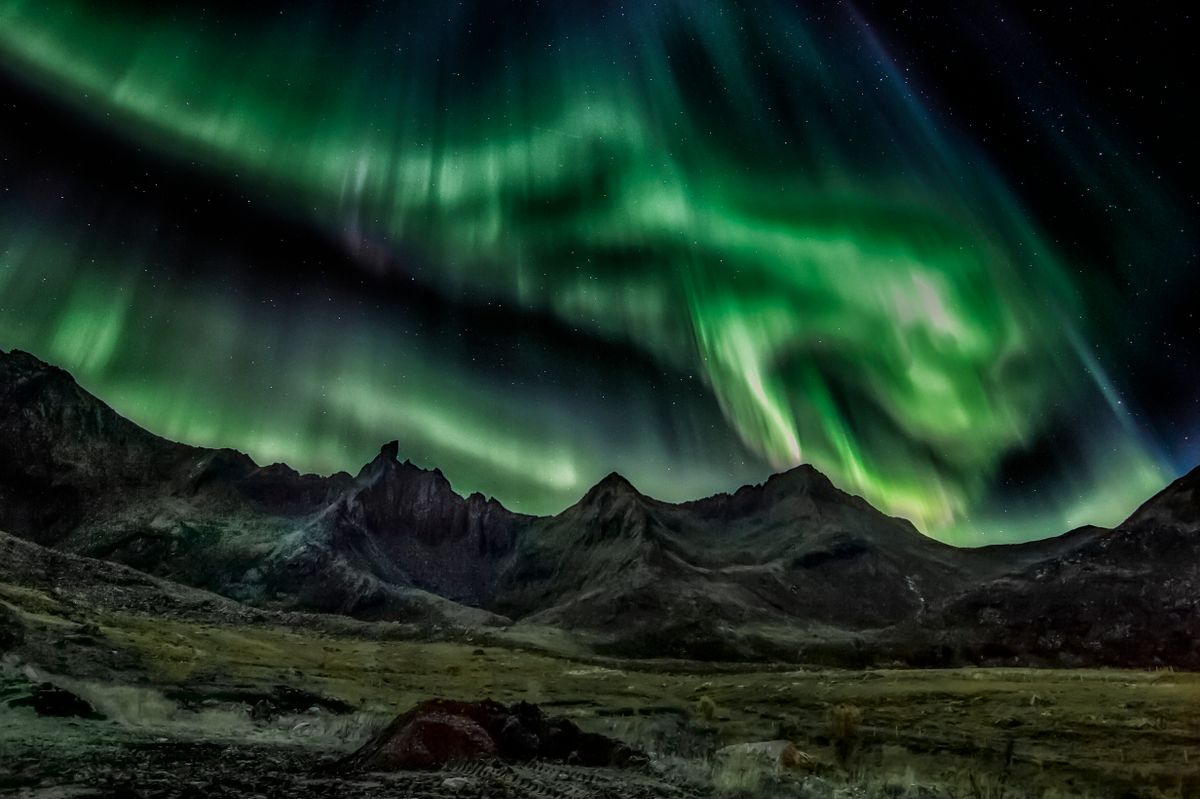
One more honest note: the lights are often fainter to the naked eye than in photographs. Cameras accumulate light over seconds; your eyes do not. A grey-green glow low on the northern horizon is a real sighting, and during strong substorms, the sky can erupt into the full dancing curtains you have seen in pictures.
How to photograph the aurora
You do not need pro gear, but you do need a tripod, there is no handholding a 10-second exposure.
- Camera: any interchangeable-lens camera or a recent phone with a manual/night mode. Shoot RAW if your camera allows it.
- Lens: as wide and fast as you have; f/2.8 or faster is ideal.
- Focus: manual focus, set on the brightest star using live view zoomed in. Tape the focus ring so it does not drift.
- Exposure: start at ISO 3200, f/2.8, 8–10 seconds, and adjust. Brighter, fast-moving aurora needs shorter exposures (3–5 seconds) to keep definition in the curtains; faint displays can go 15–20 seconds.
- Batteries: cold is brutal, carry two or three spares in an inside pocket, close to your body heat.
- Yourself: you will be standing still in the dark for hours. Dress for −30°C even if the forecast says −15°C, and bring chemical hand warmers for the stretches between shots.
For phone photographers: use night mode on a tripod or propped solidly, lock focus on a distant light or star, and keep exposures in the 5–10 second range. Results will not match a full-frame camera, but the 2026–27 storms are strong enough that phones are capturing genuinely good aurora shots.
Practical next steps
- Pick your window: October 2026 or March 2027 for peak probability; December–February for maximum darkness.
- Book refundable or flexible accommodation and give yourself 3–4 nights minimum.
- Download an aurora app (My Aurora Forecast or SpaceWeatherLive) and the NOAA SWPC bookmark before you travel, cell service is thin at the best viewing sites.
- If driving to dark-sky sites in winter, make sure your vehicle is winter-ready, see our guide at winter tires guide for Canada.
- Pack like it is −35°C even if you are "only" going to Banff; standing still under a clear prairie sky at midnight is a different cold than walking to work.
- Tell someone your viewing location and expected return time if you are heading to remote dark-sky spots alone.
The bottom line
Canada owns some of the best aurora real estate on the planet, and the 2026–27 season pairs that geography with a sun that is still near its most active. Yellowknife, Whitehorse, and Churchill remain the reliability kings, but this season's storms mean southern Canadians should keep one eye on the Kp index and a full tank of gas. The lights do not care about your schedule; check the forecast, dress for the cold, and look north.
Sources
- TravelPirates, Northern Lights October 1–2: Where to See the Aurora
- Destination Canada, Where to see the northern lights in Canada
- Northern Lights Canada, Churchill, Manitoba aurora tours
- Karmactive, Northern Lights Forecast 2026: Best Dates and Locations
- Travels with the Crew, Best Places to See the Northern Lights
- Qantas Travel Insider, Northwest Territories aurora guide
Quick answers
Frequently asked questions
01
When is the best time to see the northern lights in Canada?
Aurora season runs from late September 2026 through early April 2027, and the equinox months, September/October and March, are statistically the most active thanks to the well-documented equinoctial effect. Darkness is the other half of the equation: December and January give Yellowknife and Whitehorse 18+ hours of darkness, and skies are darkest around the new moon, when a bright moon is not washing out faint displays.
02
Where are the best places to see the aurora in Canada?
The big three bases: Yellowknife (at 62.5°N, directly under the auroral oval, with viewing season mid-August to mid-April), Whitehorse (similar latitude advantage with easier logistics and a lively tour scene, late August through mid-April), and Churchill, Manitoba (squarely in the oval, with the prime season January through late March). For any destination, plan at least three to four nights, weather, not solar activity, is the main reason trips fail.
03
Can you see the northern lights from Banff?
During strong storms, yes. When the Kp index hits 5 or higher, the aurora can be visible from Banff, Jasper National Park (a designated Dark Sky Preserve), the Prairies, Muskoka, and even southern Ontario and Quebec. The rule for southern viewing: get away from city lights, find an unobstructed view to the north, and go on the night the forecast, not your schedule, says to go.
04
How do I check tonight's aurora forecast?
Watch the Kp index (0–9): Kp5, a G1 storm, is roughly the threshold for southern Canada visibility, while Kp2–3 is often enough in Yellowknife. Check the NOAA Space Weather Prediction Center's 30-minute aurora forecast, use apps like My Aurora Forecast or SpaceWeatherLive for push alerts at your location, and always check cloud cover alongside the space-weather forecast, clouds kill more aurora nights than weak solar activity does.
05
How do you photograph the northern lights?
You need a tripod, there is no handholding a 10-second exposure. Start at ISO 3200, f/2.8, 8–10 seconds, shooting RAW with manual focus locked on a bright star. Brighter, fast-moving aurora needs shorter exposures (3–5 seconds) to keep definition in the curtains, and faint displays can go 15–20 seconds. Carry two or three spare batteries in an inside pocket, because cold drains them fast. Phone photographers can get genuinely good shots in the 2026–27 storms using night mode on a tripod with 5–10 second exposures.