Six years into the PlayStation 5 era, the game industry is in a strange intermission. The next generation of consoles is visibly taking shape in leaks and analyst notes, both Sony and Microsoft have effectively announced the end of the disc, Nintendo is selling hardware at a historic pace while raising prices, and one game, GTA 6, looms over everything. For the full breakdown of that game's release date, platforms, and everything actually confirmed, see our dedicated guide: dedicated GTA 6 guide. This piece is about everything else: where the industry stands and where it is going.
Key takeaways
- The PS6 and Xbox "Project Helix" are both in development with AMD, with analysts split between a holiday 2027 and holiday 2028 launch. Neither company has confirmed a date.
- The disc is dying on schedule: Sony will stop manufacturing discs for new PlayStation releases in January 2028, and analysts expect both next-gen consoles to ship without disc drives.
- Nintendo is the outlier, with 23.68 million Switch 2 units shipped and a willingness to raise hardware and software prices that competitors cannot match.
- Prices are the industry's quiet crisis: $90 to $110 CAD games, pricier consoles, and subscription hikes are testing how much players will pay.
- The through-line of the next generation is efficiency over raw power: AI upscaling, smarter thermals, and digital distribution doing the heavy lifting.
The Next Generation Takes Shape: PS6 and Project Helix
Sony has not announced the PlayStation 6. Not the name, not the date, not the price. Sony Group CEO Hiroki Totoki has said plainly that the company has not decided when its next-generation hardware will launch and has not locked in pricing. And yet the shape of the thing is emerging through the usual channels: chip manufacturing reports suggest PS6 silicon has already been taped out, the point where a finished chip design goes to the fab, which typically signals a launch roughly two to three years out.
Analyst expectations cluster around two windows. The optimistic read is holiday 2027, driven by the six-to-eight-year console cycle (PS4 in 2013, PS5 in 2020) and competitive pressure. The more cautious read, including Ampere Analysis, points to the end of 2028, giving the PS5 Pro room to breathe and letting advanced chip manufacturing mature into affordable yields. A former PlayStation executive even argued publicly that Sony should delay, warning that inflation-strapped households may not be ready for another big hardware purchase so soon.
Microsoft, meanwhile, has confirmed that its next-generation Xbox hardware, internally known as Project Helix, is in development with AMD as a partner. That is about all that is confirmed. Leaked specifications floating around forums, including claims of 56 teraflops for Helix versus 40 for the PS6, come from a single unconfirmed source and should be treated as rumor, not fact. What matters is the strategic picture: Microsoft is widely reported to be aiming for 2027, potentially a year ahead of Sony, which would force both companies' hands in the familiar launch-chicken game.
One honest note on the specs race: the console with the bigger teraflop number has repeatedly failed to deliver a proportionally better experience. Memory bandwidth, CPU performance, and software optimization matter at least as much. The next generation looks less like a raw-power contest and more like an efficiency contest, with dedicated AI hardware for upscaling and ray tracing expected on both machines.
The Digital-Only Future Is Now the Plan
The biggest confirmed story of 2026 is not a console, it is a funeral. Sony confirmed that all new games released on PlayStation consoles will move to digital formats starting January 2028. Games already released on disc, and games scheduled for release on disc before the cutoff, are unaffected. But the direction is unmistakable, and analysts read it as a PS6 signal: Ampere's read is that the January 2028 cutoff all but confirms the PS6 will not launch before that year.
The analyst consensus hardened fast. Circana's Mat Piscatella said it is now safe to assume both the PS6 and Project Helix will be digital-only devices. Niko Partners' Daniel Ahmad said Sony's move guarantees the PS6 ships without a disc drive. Windows Central's sources say Microsoft is doing the same with Helix. If both hold, the next generation has no standard disc drive on either major console, with physical support, if any, coming from optional add-on drives like the one Sony sells for the PS5 Slim.
What this means for players is worth stating plainly. Your existing discs are not affected, and backward compatibility for disc libraries will likely depend on add-on drives or digital conversion programs. The Verge has reported that Microsoft is working on an incentive to convert Xbox One and Series X|S discs to digital for Helix owners; Sony has said nothing comparable. The era of lending a friend a disc, reselling finished games, and true ownership of a copy is ending for PlayStation and Xbox, even as it continues for now on Nintendo hardware.
Nintendo: The Outlier That Keeps Winning
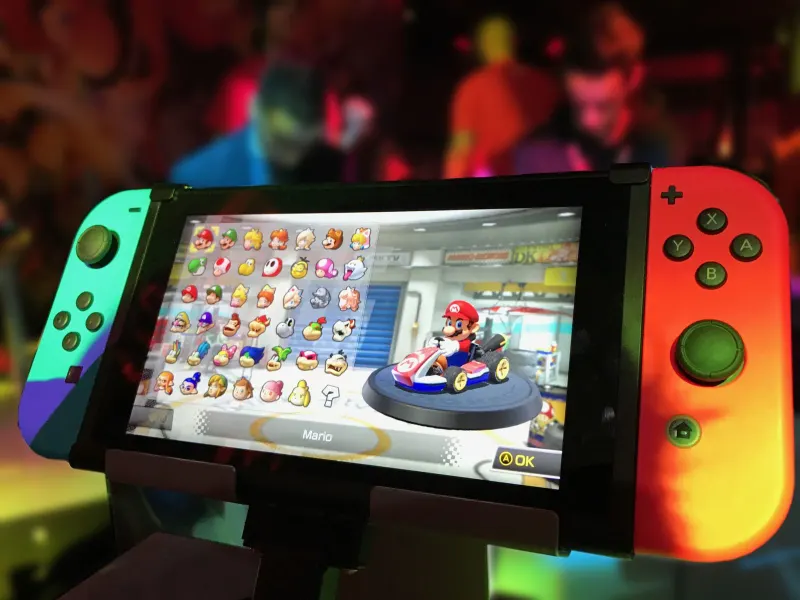
While Sony and Microsoft plan the future, Nintendo is dominating the present. The Switch 2 has shipped 23.68 million units as of mid-2026, already surpassing the GameCube's entire lifetime total, on the back of a launch lineup and a hybrid form factor nobody else offers. Mario Kart World moved at a $79.99 USD price point that would have been unthinkable a generation ago, and Nintendo kept selling.
Nintendo's confidence shows in its pricing. The Switch 2 console rose from $629.99 to $679.99 CAD in September 2026, citing market conditions, just before Canada's counter-tariff on US-origin consoles added further pressure. First-party games climbed to $99.99 CAD physically, with Mario Kart World at $109.99. And in a genuinely novel move, Nintendo began charging less for digital than physical on new first-party titles, $84.99 versus $99.99 for recent releases, passing manufacturing savings to digital buyers for the first time in industry history.
Nintendo is on its own cycle, having launched fresh hardware while its rivals plan generational transitions, which gives it years of runway. The open question is whether its pricing power survives contact with the next-generation launches. For now, the market's answer is yes.

The Price Problem Nobody Has Solved
Step back and the industry's central tension is clear: everything costs more, and nobody is sure where the ceiling is. Games at $90 to $110 CAD. Consoles that get more expensive mid-generation instead of cheaper. Subscription services raising prices within the past year on both Xbox and PlayStation. PC graphics cards still priced like luxury goods.
The industry's answer so far has been to offer cheaper ways in: ad-supported tiers, subscription libraries, free-to-play, and Nintendo's digital discount. These are real relief valves, and our guide to saving money on games covers them in detail. But the core trend points one way, and the next generation's digital-only design will remove the last price discipline mechanism players had: the used-game market. When every purchase is a non-transferable license, publishers face less pressure to discount, and the platform holders know it.
Practical next steps
- Do not buy a PS5 Pro or Xbox Series X as a "bridge" to next-gen unless you will genuinely use it for two-plus years. The next machines are coming, just not soon.
- If you own a big disc library, keep at least one disc-capable console in working order. It may become the only way to play those games.
- Start shifting new purchases digital if you plan to buy next-gen at launch, since your library will carry forward and your discs may not.
- Watch for next-gen announcements around major 2027 events. Concrete specs and dates, not forum leaks, are the signal to start planning.
- Budget for the transition now: next-gen consoles will likely launch at premium prices in an inflationary market.
The bottom line
The game industry in late 2026 is an industry between acts. The current generation still has years of great games left, the next generation is real but undated, and the disc's fate is sealed. The winners of the transition will be the players who plan around it: buying smart now, going digital deliberately, and letting the launch hype pass before spending. The future is coming in 2027 or 2028. There is no prize for paying the most to get there first.
Sources
- VideoCardz: Next Xbox and PS6 are now expected to move fully digital (July 2026). https://videocardz.com/newz/next-xbox-and-ps6-are-now-expected-to-move-fully-digital
- Player.one: PS6 release should be delayed, says former PlayStation executive. https://www.player.one/ps6-release-should-delayed-says-former-playstation-executivewhy-did-he-suggest-it-164202
- TechInsider: Xbox Helix leak, 56 TFLOPS claim vs PS6 40 TFLOPS (October 2026). https://tech-insider.org/xbox-helix-leak-56-tflops-ps6-2026/
- Geek Slop: PlayStation 6 release date still unannounced amid leaks. https://www.geekslop.com/entertainment/geeky/gaming/2026/playstation-6-release-date-leaks
- Push Square: PS6 may not be the only fully digital console next-gen (July 2026). https://www.pushsquare.com/news/2026/07/ps6-may-not-be-the-only-fully-digital-console-next-gen
- TechInsider: Nintendo Switch 2 bundle, $749.99 CAD after 8 percent price hike (October 2026). https://tech-insider.org/ca/nintendo-switch-2-mario-kart-bundle-canada-2026/
Quick answers
Frequently asked questions
01
When is the PS6 coming out?
Sony has not announced a date, and CEO Hiroki Totoki has said the company has not decided on timing or pricing. Industry analysts generally point to a holiday 2027 or holiday 2028 window, with some expecting late 2028. Reports of the PS6 chip being taped out suggest hardware design is well advanced, which typically signals a launch two to three years out.
02
Will the PS6 have a disc drive?
Probably not as standard. Sony confirmed that new PlayStation releases will move to digital formats starting January 2028, and analysts including Circana's Mat Piscatella and Niko Partners' Daniel Ahmad now treat a digital-only PS6 as the base assumption. Sony may offer a detachable disc drive add-on, as it did for the PS5 Slim, but that is unconfirmed.
03
What is Xbox Project Helix?
Project Helix is Microsoft's confirmed next-generation Xbox hardware effort, developed with AMD. Microsoft has confirmed the project exists but has not confirmed specifications or a launch date. Reports place it in a similar 2027 window to the PS6, and Windows Central sources say it will also skip the disc drive.
04
Are physical video games going away?
For new releases, effectively yes within a few years. Sony will stop manufacturing discs for new PlayStation releases from January 2028, and both next-generation consoles are expected to be digital-only. Existing discs and games released before the cutoff are unaffected, and Nintendo has not announced a similar move. Expect a long tail of physical for collectors and Nintendo titles.
05
Is GTA 6 still the biggest upcoming game?
Without question. It remains the industry's most anticipated release and the title analysts expect to move hardware. For the full breakdown of its release date, platforms, and everything actually confirmed, see our dedicated guide: /posts/gta-6-release-date-everything-confirmed.
06
Should I buy a PS5 or Xbox Series X now, or wait for next-gen?
If you do not own a current-gen console, buying now still makes sense: the PS6 and next Xbox are likely two-plus years away, and the current libraries are deep and heavily discounted. If you already own one, there is little reason to upgrade until next-gen launch lineups are concrete. Nintendo Switch 2 buyers are on a separate, newer cycle entirely.